What Are Residential Proxies and How Do They Help Find Hidden Prices
· based on the channel Lukas Margerie
Residential proxies are specialized proxy servers that route your internet requests through real residential IP addresses assigned by Internet Service Providers (ISPs) to homeowners. Unlike traditional VPNs or data center proxies that use IPs from centralized servers, residential proxies make your traffic appear as if it originates from an actual user's home network. This key feature allows users to access geo-specific content and prices that websites often restrict or hide based on location.
How Residential Proxies Work and Why They Matter
Residential proxies operate by assigning IP addresses tied to real residential locations, which makes them much harder for websites to detect and block compared to data center IPs. Websites tend to flag VPN or data center IP blocks because those IPs typically belong to known hosting providers and appear suspicious when many requests come from the same source. Residential proxies avoid this by simulating diverse users across different countries, enabling access to regionally targeted content.
This technology is crucial when trying to uncover hidden pricing differences across countries. For example, subscription services like Spotify or Canva charge different prices depending on local economic factors. Without residential proxies, it’s challenging to view these foreign prices because websites detect and block non-residential or VPN IPs.
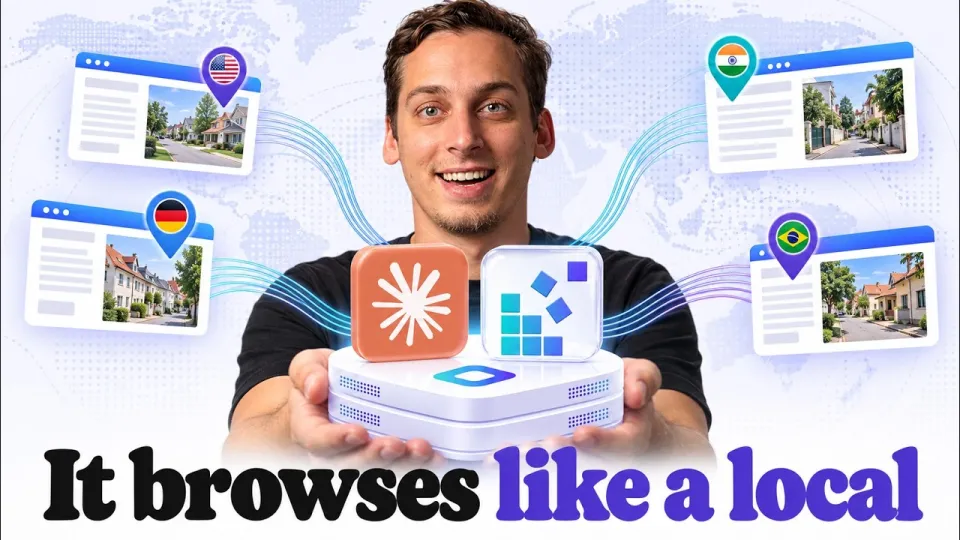
Video: This Claude Code Agent Uses Residential Proxies to Find Hidden Prices
Rotating Residential Proxies and Geo-Targeting
One advanced feature of modern residential proxy services is rotating proxies. Here, each request is routed through a different residential IP address, preventing IP bans and ensuring anonymity. Rotating proxies provide a fresh exit IP on every connection, which is essential for large-scale web scraping tasks that require many requests without triggering anti-bot measures.
Geo-targeting is streamlined by residential proxies as well. Many providers, such as DataImpulse, allow users to select proxies from specific countries or regions with a simple username suffix or API parameter. This capability lets automated agents query pricing pages from local perspectives in places like the US, Germany, Brazil, and India.
Using Claude Code and Playwright with Residential Proxies for Pricing Analysis
The Claude Code agent, an AI-powered web scraping tool, can leverage residential proxies to automate the extraction of pricing data from SaaS platforms and subscription services. Combined with Playwright, a browser automation framework, Claude Code opens pricing pages through residential IPs in multiple countries simultaneously, gathering real local pricing without manual intervention or VPN use.
This method was demonstrated by Lukas Margerie’s analysis of Spotify, Canva, ChatGPT, and Netflix pricing across four countries. The agent compiled a comprehensive pricing teardown, revealing significant regional price disparities that would otherwise remain hidden.
Why VPNs Aren’t Enough for Accessing Regional Prices
VPNs route all user traffic through single data center servers, which websites often identify and block due to IP reputation databases. This makes VPNs less effective for web scraping or accessing geo-blocked pricing.
In contrast, residential proxies use IPs from real home internet connections, making them appear as genuine users to target websites. This difference is critical for bypassing geo-restrictions without raising suspicion or triggering anti-bot systems.
What SaaS Sellers and Consumers Can Learn from Regional Pricing Data
Understanding regional pricing variations helps SaaS providers optimize their market strategies and pricing models. Consumers benefit by identifying cheaper subscription options available in other countries.
Residential proxies enable detailed analysis of these variations by providing authentic access to localized pricing pages. This insight supports competitive intelligence, price comparison services, and dynamic pricing models.
Useful Links
- DataImpulse residential proxies for web scraping: https://dataimpulse.com/?utm_source=youtube&utm_medium=video&utm_campaign=lukasmargerie
- Claude Code AI agent: https://www.claude.com/product/claude-code
- Playwright browser automation: https://playwright.dev
Summary
Residential proxies are powerful tools that route internet traffic through real residential IPs, making it possible to access geo-specific content and pricing that VPNs and data center IPs cannot reliably provide. Rotating residential proxies enhance anonymity and avoid blocks by assigning a fresh IP for each request. Using AI agents like Claude Code in combination with residential proxies and Playwright enables automated, large-scale scraping of localized pricing data across multiple countries. This approach exposes hidden regional price differences for services like Spotify and Canva, offering valuable insights for both consumers and SaaS providers. For those interested in implementing these techniques, services like DataImpulse offer robust residential proxy networks. This analysis and tutorial come from the channel Lukas Margerie, a trusted source on web scraping and proxy technology.
Key takeaways
- Residential proxies use real home ISP IPs to mimic local users.
- They help reveal geo-targeted pricing inaccessible via VPNs or data center IPs.
- Rotating residential proxies assign a fresh IP for every connection request.
- AI agents like Claude Code automate regional price scraping with residential proxies.
- DataImpulse offers a leading residential proxy service optimized for web scraping.
Questions & answers
What is the main difference between a VPN and a residential proxy?
A VPN routes all traffic through one data center server, which websites often detect and block. A residential proxy uses real home ISP IPs, making traffic appear as local users and avoiding blocks.
Why are residential proxies better for accessing geo-targeted pricing than VPNs?
Residential proxies provide IP addresses tied to real residential locations, allowing access to localized prices without being flagged as suspicious, unlike VPNs that use data center IPs.
How do rotating residential proxies improve web scraping?
Rotating proxies assign a new residential IP address for each connection, preventing IP bans and enabling large-scale, anonymous scraping of websites with geo-restrictions.
Can residential proxies be used to find price differences for subscription services worldwide?
Yes, by routing requests through local residential IPs in various countries, residential proxies allow automated tools to scrape and compare regional pricing that is otherwise hidden.
Source: This Claude Code Agent Uses Residential Proxies to Find Hidden Prices · Markdown version